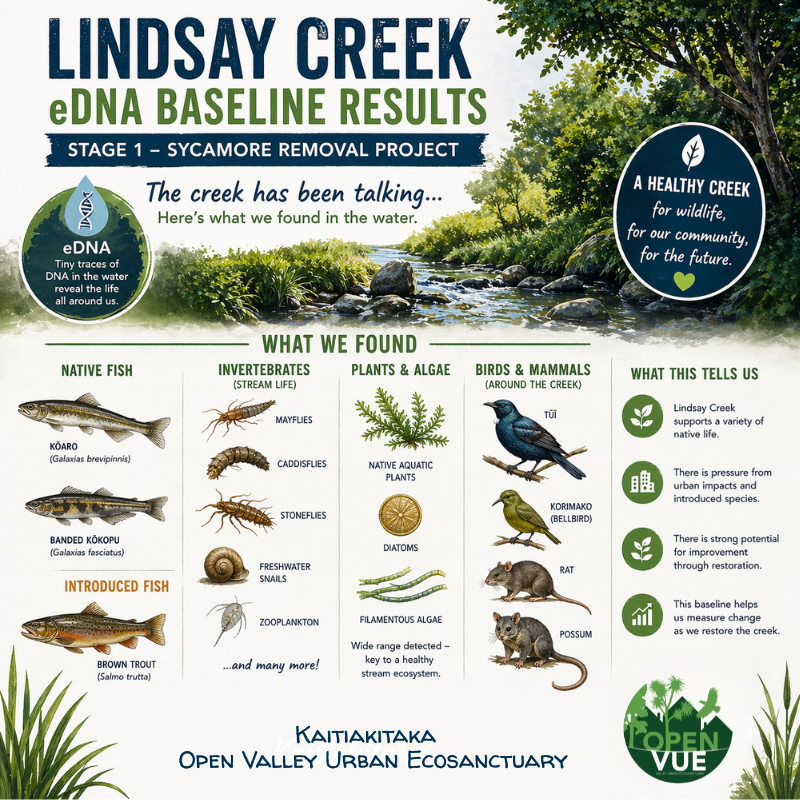
Lindsay Creek eDNA Test Results 2026

Lindsay Creek eDNA Baseline Report
1. Introduction
Lindsay Creek is a key tributary of the Water of Leith/Ōwheo, flowing from the slopes of Mt Cargill through North East Valley to the Dunedin Botanic Garden. It supports a mix of urban and semi-natural habitats and plays an important ecological and community role.
As part of Stage 1 of the Sycamore Removal Project, environmental DNA (eDNA) sampling was undertaken across multiple sites to establish a baseline dataset of biodiversity and stream health.
eDNA testing detects traces of genetic material left behind by organisms in water, providing a broad and non-invasive snapshot of ecosystem life.
2. Methodology
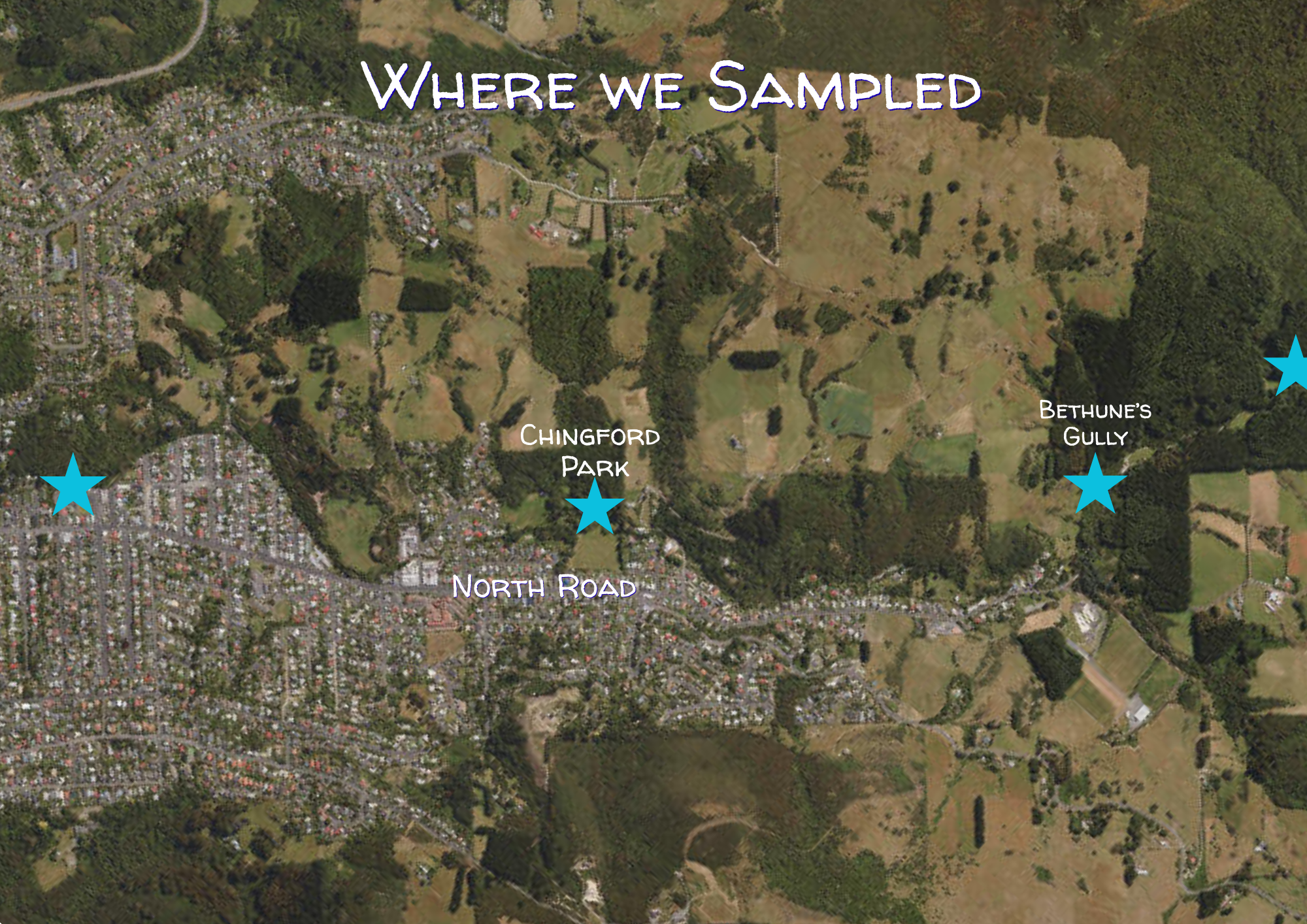
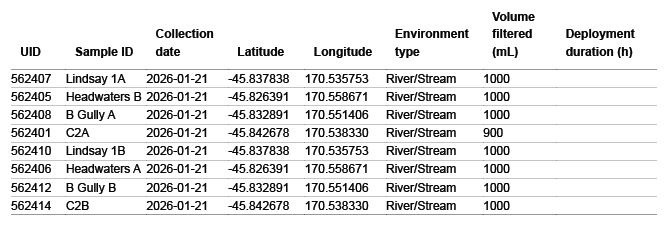
Water samples were collected from four sites along Lindsay Creek and analysed by Wilderlab using multi-species DNA sequencing. This approach enables detection of:
- Fish
- Invertebrates
- Birds and mammals
- Plants and algae
The results provide an integrated picture of ecological condition across the catchment.
3. Key Findings (Collated Across All Sites)
3.1 Biodiversity Overview
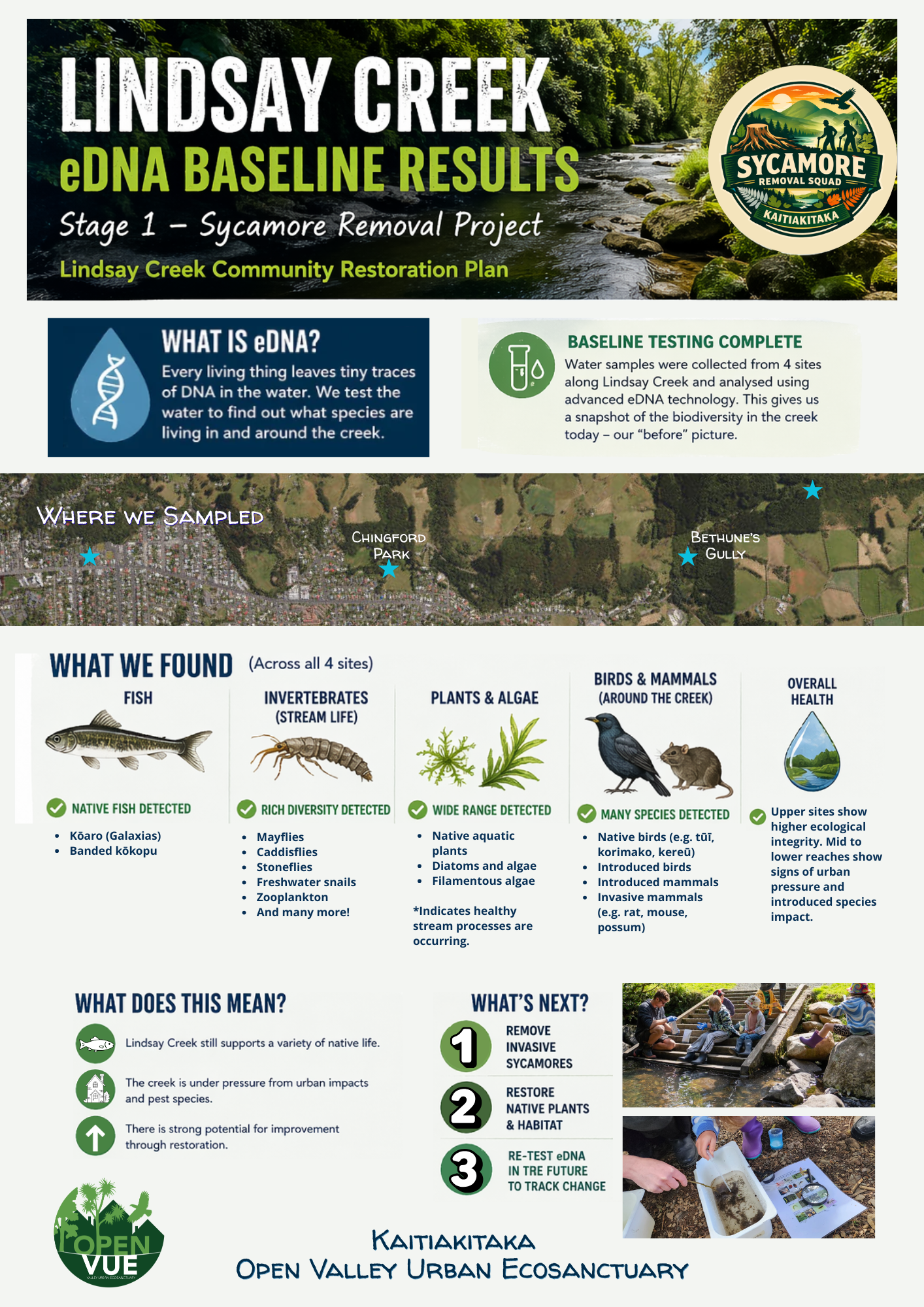
- A wide range of native and introduced species were detected across all sites
- Presence of aquatic invertebrates and algae indicates active ecosystem processes
- Detection of terrestrial species DNA reflects strong land–water connections
3.2 Native Species Signals
- Native freshwater fish species were detected at some sites, suggesting remaining habitat value
- Indigenous biodiversity persists despite urban pressures
3.3 Pest and Introduced Species
- Signals of introduced fish and mammals were present
- This indicates ongoing ecological pressure and habitat modification
3.4 Ecological Health Patterns
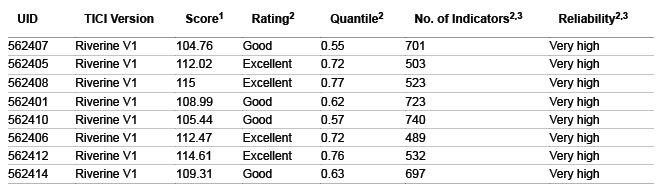
- Upper catchment sites generally showed higher ecological integrity
- Mid- to lower-reaches reflected urban impacts, including reduced diversity balance
- Overall condition aligns with a modified but recoverable urban stream system
4. Interpretation
The eDNA results confirm that Lindsay Creek:
- Still supports meaningful biodiversity values
- Is impacted by urbanisation and invasive species
- Has strong potential for ecological recovery
This baseline is critical. It provides a “before” snapshot against which future restoration outcomes can be measured.
5. Relevance to Sycamore Removal
Sycamore trees are a significant invasive species within the catchment. Their removal is expected to:
- Reduce dense shading and leaf litter impacts
- Improve native plant regeneration
- Enhance stream habitat quality
- Support improved biodiversity outcomes over time
Future eDNA monitoring will allow measurable tracking of these improvements.
6. Conclusion
This study establishes a robust scientific baseline for Lindsay Creek. The findings reinforce the importance of coordinated restoration and provide a foundation for long-term ecological monitoring under the Lindsay Creek Community Restoration Plan.